Discover the Micro-World with Matatastudio Wireless Microscope M2C
In an age where screen time often dominates children’s free hours, finding a gadget that engages, educates and excites is a win for parents and educators alike. Enter the Wireless Digital Microscope by MatataStudio a tool designed to let curious young minds zoom in on the unseen, explore the teeny-tiny, and spark science learning right at home (or classroom).
Whether your child loves bugs, leaves, coins, electronics or just “what’s this look like under the microscope?”, this gadget promises to deliver hands-on discovery in a fun & meaningful way.
Key Features at a Glance
Here are the standout specs and features that set this microscope apart:
Magnification: Up to 50X-1000X (in some descriptions up to 1600X digital) so you can zoom from “just a little bigger” to “wow that’s tiny”.
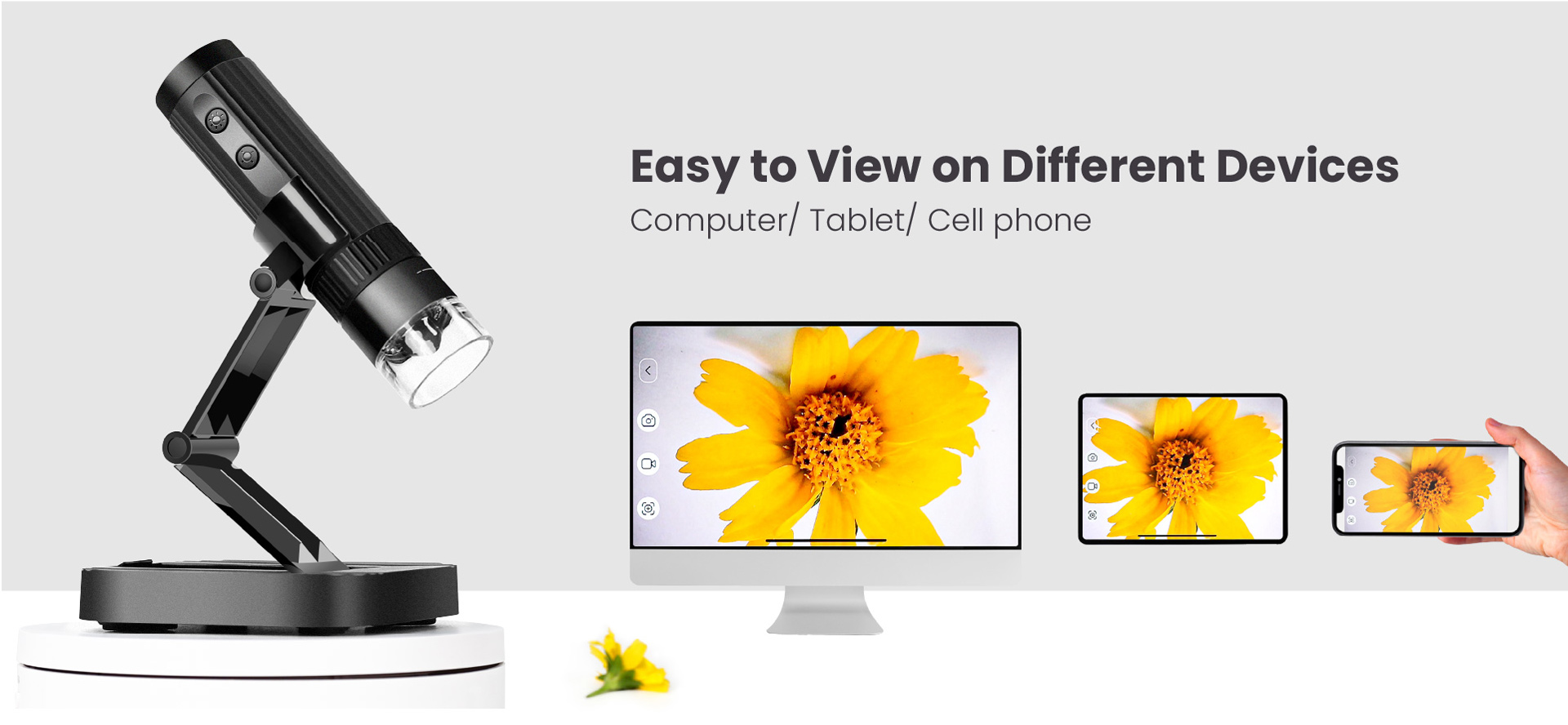
Compatibility: USB / WiFi connection so it can link with tablets, phones, computers — perfect for group viewings or capturing images.
Lighting & versatility: Features incident and transmitted LED lighting (so transparent and opaque specimens work), plus intelligent dyeing or colour-adjustment in some models.
Built for kids/learning: Although powerful enough for hobbyists, the design accommodates younger users — apt for STEAM (Science-Tech-Engineering-Arts-Math) in home or school.
Records/Views: Many versions include a screen or connect to a screen, save photos/videos, etc. Makes review & sharing easy.
Why It Works for Kids’ Learning
Here’s how this microscope transforms from “just a gadget” into a useful tool for learning and discovery:
Curiosity-Driven Exploration Kids naturally ask questions like “What’s inside this leaf?”, “How are insects built?”, “What’s under the coin?” This microscope gives them the tool to answer those questions. When children see the details for themselves (veins in a leaf, the surface texture of a rock, or the circuitry on a board) it fosters deeper interest and retention.
Hands-On Science Skills Using this microscope builds several foundational skills:
Observing: Not just looking, but noting patterns, details, irregularities.
Questioning & hypothesizing: “I think this is what’s happening… let’s see under higher magnification.”
Documenting: Taking pictures, videos, logging what they find.
Sharing/Discussing: Showing their findings to family, friends, or teacher. It becomes more than “look what I found” – it’s “look what I discovered, and here’s what I think it means.”
Bridges Science & Everyday Life Often microscopes feel like “lab only” equipment. But with this model’s portability and ease-of-use, children can explore everyday items: leaves from the garden, fabric threads, skin patterns, insects, coins, printed circuit boards, etc. Learning becomes embedded in their environment, not just confined to textbooks.
Encourages STEAM Integration
Science: Biology (cells, insects), geology (minerals), material science (fabric, electronics).
Technology: Connecting microscope to device, capturing images, using apps/software.
Engineering: Understanding structures, designing experiments (“What if I change the lighting or magnification?”).
Art: Macro photography and videography, seeing beauty in micro-scapes.
Math: Measuring sizes, estimating magnification effects, understanding scale. This makes it ideal for modern educational frameworks that look beyond rote memorization.